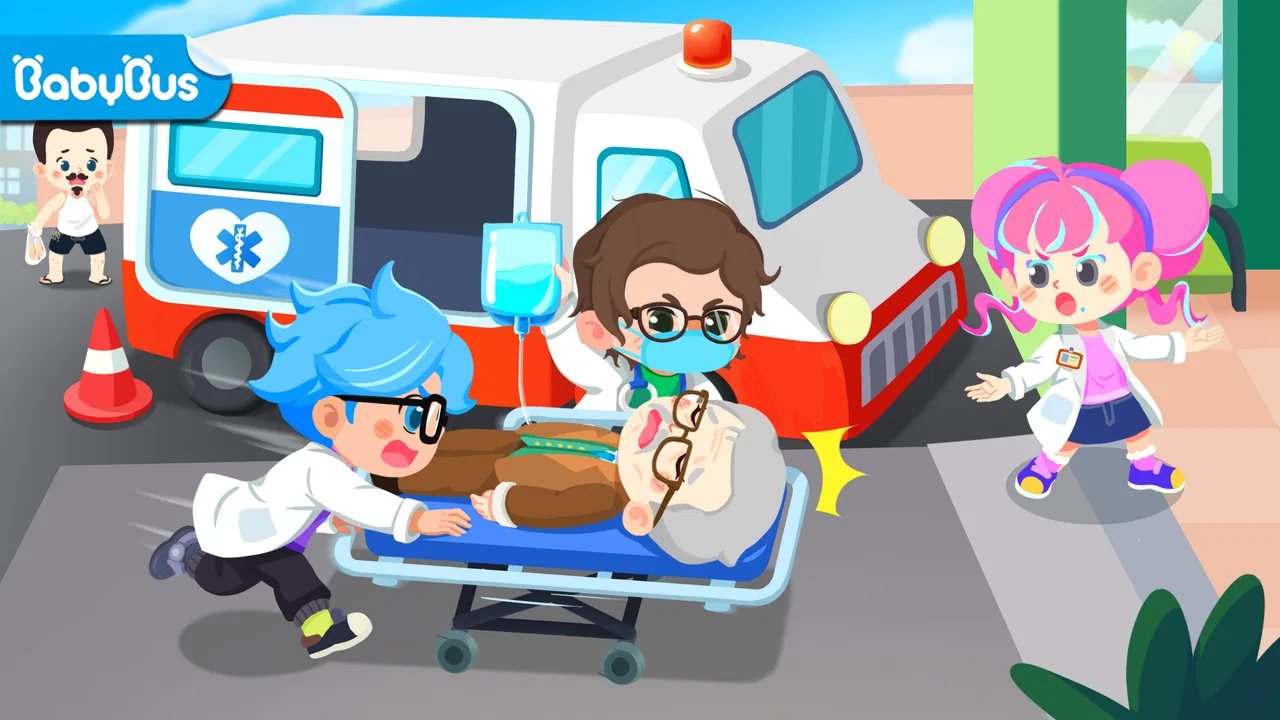
Baby Panda's Town: Hospital
- 4.6
- Rating
- 10.00M
- Installs
- Free
- Price

 Analysis by App-foxy
I spent time with Baby Panda's Town: Hospital to see whether its central idea—helping patients and building a small hospital story around that care—is genuinely engaging for children or simply another bright children’s game. My impression is that its strongest quality is not complexity. It is the way it turns a familiar hospital setting into a gentle sequence of choices, observation and pretend play. That makes it approachable for young players who may enjoy helping characters more than competing against them.
This is a free educational game from BabyBus, rated for Everyone, and it has attracted more than ten million installs. The average score sits at 3.9 from roughly 9.7 thousand ratings, which suggests a broadly positive reception but also leaves room for individual preferences to matter. I would describe it as a casual learning experience rather than a serious medical simulator. The hospital theme is a setting for simple interaction, not a lesson in real diagnosis or professional healthcare.
Helping patients is the feature that shapes the whole experience
The most important capability here is the patient-care loop. Instead of asking a child to memorize facts or manage a complicated hospital, the game places the player in a helpful role: notice what a patient needs, take part in the care process and see the hospital story move forward. That sounds modest, but it changes the tone completely. The player is not pushed to defeat an opponent. The motivation comes from making a character feel better and continuing the story.
You May Also Like

 Blood Strike: 2.5 Anniversary
Blood Strike’s Loadouts Turn Every Drop Into a Tactical Gamble
A close look at Blood Strike’s custom loadouts: how fast access to signature weapons reshapes its battle royale rhythm, rewards preparation, and narrows the gap between fights.

 Pandora - Music & Podcasts
Pandora’s Music Is Easy to Start, but Harder to Recover
Pandora’s strength is its low-effort path from a seed to a station. Its weak spot is how much confidence it asks you to place in connection, setup, and quiet recovery.

 8 Ball Pool
 Is Built on Rivalries, Rematches, and Routine
A close look at the rivalries, rematches, shared routines, and unanswered safety questions that turn a quick pool match into a persistent mobile community.

 Samsung Music
’s Quiet Strength Is Playing What You Already Own
Its reach comes less from spectacle than from dependable access to a personal library. That simplicity is both the app’s strongest retention engine and its ceiling.

 AccuWeather: Weather Radar
AccuWeather Review: A Quick, Clear Forecast for Everyday Decisions
For everyday plans, the best forecast is the one you can understand quickly. AccuWeather makes rain timing, radar, and local conditions easy to act on, with a few trade-offs.

 Hill Climb Racing
Why Hill Climb Racing Still Turns Crashes Into One More Run
A tiny car, a bumpy hill and one more upgrade: Hill Climb Racing keeps resurfacing because its simple chaos makes every near-miss feel personal.
More From Our News Desk



In my experience, this kind of design works especially well for children who are drawn to role-play. A child can pretend to be responsible for the hospital without facing the pressure of a timer-heavy challenge or a demanding resource system. The actions feel understandable because they follow a familiar emotional pattern: someone needs help, I do something useful, and the situation improves.
That is also why I would not judge this game by the standards of a traditional puzzle title. Its success depends less on deep strategy and more on whether the interactions are clear, friendly and varied enough to hold attention. The educational value comes through the context. Children encounter ideas such as caring for others, following a sequence and paying attention to visible clues, rather than receiving a formal classroom-style explanation.
The practical strength is guided pretend play. A parent looking for a quiet activity can use it as a starting point for conversation: What might a patient need? Why do we follow steps when helping someone? How can we make a person feel comfortable? The game does not replace those conversations, but it gives them a concrete setting that a child can understand.
What the hospital theme does well
Hospitals can seem intimidating to young children, particularly if they have recently visited one. A soft, playful treatment of the setting can make the idea less frightening. Here, the focus is on helping rather than on illness itself. That distinction matters. The player is invited to act with care and curiosity, not to worry about realistic medical consequences.
I also like that the theme naturally supports different kinds of play. One child may focus on completing the patient’s immediate need, while another may be more interested in the characters and the unfolding story. That flexibility gives the game a wider audience than a narrowly academic activity. It can be used for short independent play, shared play with a parent or a gentle transition after school.
There is a limit, though. Parents should not expect accurate medical instruction simply because the setting is a hospital. The game is best understood as imaginative educational play. If a child wants to learn anatomy, first aid or how real clinics operate, a dedicated learning resource will be more suitable. This title’s contribution is social and procedural: it encourages the child to notice, respond and care.
How I found the patient-care loop in everyday play
The experience is easiest to understand as a series of small tasks connected by the hospital story. The child meets a patient, works through the situation and participates in the process of making things better. Because the premise is repeated in different story moments, the game remains accessible even when a player is too young to read confidently or has not played many mobile games before.
That accessibility is important on a touch screen. Young players often tap quickly, miss visual cues or move away from the intended action. A game built around direct care can recover from those mistakes more gracefully than a precision platformer or a puzzle that demands exact timing. I found the concept more suitable for exploration than for performance. The child can learn by trying rather than feeling punished for every wrong touch.
A useful way to play is to let the child explain each action aloud. Instead of rushing through the sequence, I would ask, “What do you think this patient needs?” or “What should we do first?” This turns the game from passive tapping into a small reasoning exercise. It also reveals whether the child understands the visual direction or is simply touching everything on screen.
That approach highlights one of the less obvious benefits: the game can support language development when an adult plays nearby. A child can describe symptoms in ordinary words, name objects, talk about feelings and retell what happened. The app itself does not need to provide a formal vocabulary lesson for the hospital setting to become a useful prompt for speaking and listening.
A better way to use it than handing over the phone
I would avoid treating this as an unlimited background activity. The patient-care structure is more meaningful when the child has a clear purpose. A parent might introduce one hospital story, allow the child to explore it, then ask the child to recount the order of events. That simple pause helps reinforce sequencing and prevents the experience from becoming a blur of repeated taps.
Another practical tip is to watch for the difference between recognition and guessing. If the child completes a task, ask why that action made sense. If the answer is unclear, guide the child back to the visual clues rather than giving the solution immediately. This makes the game more educational without turning it into a test.
For siblings, the game can work as a cooperative conversation even if only one person is holding the device. One child can suggest what to do while the other performs the action, then they can switch. That arrangement is particularly useful when one child is more confident with touch controls and another is more interested in the story. It gives both children a role instead of rewarding only the fastest tapper.
The trade-off is that the game may feel too guided for older children who want open-ended management. If a player expects to design a complete clinic, balance staff, choose equipment or make difficult strategic decisions, this is not the right kind of hospital game. Its appeal comes from focused patient stories, not from running a detailed institution.
The best everyday scenario is a short, shared play session
The clearest use case I can imagine is a child who has a little time before dinner or bedtime and wants something calmer than a competitive game. A parent can sit nearby for one story, let the child take the lead and use the hospital situation to talk about kindness, patience and following steps. The session does not need to become a lesson. A few questions are enough to make the play more thoughtful.
It can also be useful after a child has experienced a routine medical visit. The game offers a fictional space where the child can revisit the idea of patients receiving care without having to discuss a personal appointment directly. Some children process unfamiliar experiences through pretend play. In that situation, the hospital setting may help them express what they noticed or what made them nervous.
I would be more cautious about using it immediately after a distressing hospital experience, however. Even a friendly version of the theme could remind a child of something uncomfortable. The right choice depends on the child’s reaction, not simply on the Everyone rating. If the child shows anxiety, another category of game may be better for that moment.
For preschool and early primary-age players who enjoy caring for dolls, animals or toy figures, the concept is a natural fit. The hospital gives that nurturing instinct a clear structure. Children who prefer racing, construction, fast reactions or discovery without instructions may lose interest sooner. That is not a flaw in the game so much as a reminder that its audience is defined by the care-centered premise.
Where it compares well with familiar alternatives
Compared with a coloring app, this game asks the child to follow a situation and respond to a character rather than simply create an image. Compared with a traditional quiz, it offers more emotional context and less pressure to produce a correct verbal answer. Compared with a full simulation game, it is easier to enter and far less demanding, but also much less deep.
That middle position is its main identity. It is more interactive than a passive storybook and gentler than a strategy game. I would choose it when the goal is to encourage role-play and simple decision-making. I would choose a dedicated educational app instead when the goal is a measurable lesson in numbers, letters, science or health facts.
The BabyBus style also makes the experience feel designed for younger users rather than adapted from an adult hospital simulator. That can be reassuring for parents, but it may make the presentation feel overly simple to children who have already moved on to more elaborate games. The best match is a player who values friendly characters and immediate feedback over challenge.
Trade-offs parents should consider before installing
The game is free to download, which makes trying it straightforward, but it includes in-app purchases ranging from $2.49 to $41.99 per item. That is the most important practical point for families. I would check the device’s purchase controls before giving a child unrestricted access. A child may understand the play very well while still not understanding that a tap can lead to a real charge.
The presence of purchases does not automatically make the game unsuitable, but it changes how I would introduce it. I would set expectations before play begins and make it clear which parts are available without spending. For a shared family device, purchase protection is especially important because a child may assume every visible option is part of the free experience.
Another consideration is repetition. The patient-care structure is approachable because it follows recognizable patterns, but that same clarity can become predictable for children who need constant novelty. I would not select this as the only game on a tablet. It works better as one calm option among creative, physical and more challenging activities.
There is also a difference between educational atmosphere and educational depth. The game can encourage empathy, sequencing and conversation, but parents looking for a structured curriculum should keep their expectations measured. It is a play experience with learning opportunities, not a replacement for a teacher, a health professional or a purpose-built study program.
Device compatibility is reasonably broad for a modern children’s title: it requires Android 6.0 or later. The current version is 8.73.05.00, so I would still keep the app updated through the normal store process when possible. Since the game is intended for young players, an adult should also spend a few minutes checking how the child navigates it and whether the available content suits the family’s preferences.
Small details that affect the decision
The Everyone age classification makes the game easy to consider for a family audience, but age labels cannot predict every child’s response to a medical theme. A sensitive child may prefer a town, animal-care or creative game instead. Conversely, a child who enjoys pretending to be a doctor may find the setting comforting and motivating.
The rating of 3.9 is neither a warning sign nor a guarantee. I read it as a reason to focus on fit. The game has reached a large audience, with over ten million installs, yet popularity does not solve the central question: will this particular child enjoy gentle patient stories? The answer depends much more on temperament than on the size of the user base.
One useful trade-off is control versus independence. The guided nature lets a younger child participate without needing advanced reading or gaming skills, but it may give an older child fewer opportunities to invent their own solutions. If your child becomes frustrated when a game does not allow free experimentation, watch the first session before deciding whether it deserves a permanent place on the device.
Who gains the most from this BabyBus hospital game?
I would recommend Baby Panda's Town: Hospital to families seeking a friendly, low-pressure game that turns caring for patients into a simple interactive story. It is especially suitable for children who enjoy pretend professions, helping characters and talking through what they see. It can also be a useful shared activity when an adult wants to encourage empathy and sequencing without presenting a formal worksheet.
I would skip it for a child who wants realistic medicine, complex hospital management or a strong competitive challenge. I would also look elsewhere if the main goal is teaching specific academic content. In those cases, a focused science, literacy or numeracy app will provide clearer progress and more direct instruction.
My final view is positive but specific: this game succeeds when it is treated as guided role-play, not as a complete educational course. The hospital capability gives children a reason to observe a situation, make a caring response and see a story continue. Used in short sessions, with purchase controls in place and an adult occasionally joining the conversation, it can be a worthwhile free addition to a young child’s collection.
BabyBus released the game on November 27, 2023, and its continuing appeal comes from a simple idea rather than technical ambition. I would install it for a child who likes helping more than winning, then judge it by the quality of that child’s engagement: Are they explaining their choices, remembering the order of care and showing interest in the patients? If so, the game is doing its job. If they are only tapping through familiar actions, it may be time to move to a richer alternative.
FAQs for Baby Panda's Town: Hospital
01What age group is Baby Panda's Town: Hospital suitable for?
Baby Panda's Town: Hospital is designed for children aged 3 to 8 years old. The game offers a safe, educational, and entertaining environment for young kids. It focuses on role-playing and simulating hospital scenarios, which can help children learn about healthcare and develop empathy and problem-solving skills.
02Is Baby Panda's Town: Hospital safe for kids to use?
Yes, Baby Panda's Town: Hospital is specifically developed with children's safety in mind. The app includes parental controls and is free from inappropriate content. It also adheres to strict privacy policies, ensuring that no personal data is collected from your child during gameplay.
03Does Baby Panda's Town: Hospital require an internet connection?
No, the game does not require an internet connection to play. This offline capability makes it convenient for children to enjoy the app anywhere, whether on a long car ride or in areas with limited internet access. However, an internet connection may be needed for downloading updates.
04Are there any in-app purchases in Baby Panda's Town: Hospital?
While Baby Panda's Town: Hospital is free to download, it may offer in-app purchases to enhance the gaming experience. These can include new levels, characters, or special features. Parents should be aware of these options and can use parental controls to manage purchases.
05What educational benefits does Baby Panda's Town: Hospital offer?
The app provides a playful learning environment where children can explore various hospital roles and scenarios. It encourages imaginative play, enhances cognitive skills, and teaches basic healthcare concepts. Through interactive activities, children learn about empathy, responsibility, and the importance of helping others.
Pros
- Engaging educational content for kids.
- Colorful and appealing graphics.
- Interactive role-playing experiences.
- Safe environment for children to explore.
- Frequent updates with new features.
Cons
- In-app purchases may be frequent.
- Ads can interrupt gameplay.
- Limited offline functionality.
- Some features require internet.
- Might be too simplistic for older kids.

Baby Panda's Town: Hospital
Gallery